Farmers Trained in Scientific Mulberry Cultivation/Silkworm Rearing
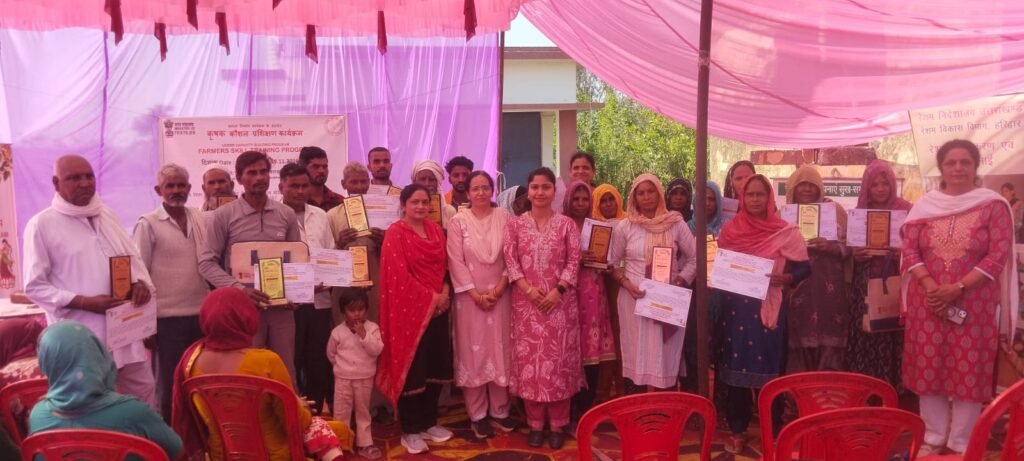
– Two three-day Farmers’ Skill Development Training Programmes organized in Pauri Garhwal and Haridwar districts.
– Training focused on scientific mulberry cultivation, nursery management, nutrient management and sustainable production of quality mulberry leaves.
– Farmers equipped with advanced silkworm rearing techniques, disease prevention and quality cocoon production practices.
– Joint initiative of RSRS Sahaspur and the Directorate of Sericulture, Uttarakhand, to strengthen farmers’ skills and livelihood opportunities.
Dehradun, 19 November 2026:
The Regional Sericultural Research Station (RSRS), Sahaspur, Dehradun, under the Central Silk Board, Ministry of Textiles, Government of India, successfully organized two three-day Farmers’ Skill Development Training Programmes in Uttarakhand. The programmes aimed to strengthen mulberry-based sericulture, promote the adoption of scientific technologies and enhance farmers’ technical skills for sustainable and economically viable silk production.
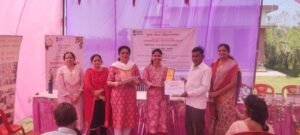
The first training programme was conducted from 11 to 13 November 2026 at Amsaur, Kotdwar, in Pauri Garhwal district, with the participation of 22 farmers. The second programme was organised from 17 to 19 November 2026 at Ikkad, Haridwar district, with 20 farmers participating. Both programmes were coordinated by Dr. Sakshi Vaishnav, Scientist-B, RSRS, Sahaspur, in close collaboration with officials of the Directorate of Sericulture, Uttarakhand, stationed at Pauri Garhwal and Haridwar, respectively.
The training programmes provided comprehensive technical knowledge on improved scientific mulberry cultivation practices, including nursery management for quality planting material, land preparation, scientific planting methods, pruning and shoot management, balanced nutrient and irrigation management, and sustainable production of high-quality mulberry leaves. Farmers were encouraged to adopt recommended agronomic practices to improve mulberry leaf productivity and quality, which are essential for successful silkworm rearing.
Under the silkworm rearing component, farmers received detailed training on scientific chawki (young-age) and late-age silkworm rearing practices, identification of different larval instars and moulting stages, regulation of temperature and relative humidity, rearing bed management, and effective disinfection of rearing houses and equipment. Special emphasis was placed on identifying and preventing major silkworm diseases, along with the scientific and safe application of bed disinfectants to minimize disease incidence and associated crop losses.
The programmes also covered the management of mature silkworms, selection and proper utilisation of suitable mountages, maintenance of favourable environmental conditions during cocoon spinning, and scientific practices for producing quality cocoons. Farmers were further familiarized with cocoon quality assessment, sorting, grading, storage and marketing practices to improve the commercial value of their produce, manage production costs effectively and enhance economic returns.
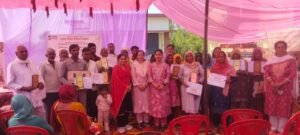
At the conclusion of both programmes, exit-level assessments were conducted to evaluate the knowledge and skills acquired by participants. Feedback was also collected to assess the relevance and effectiveness of the training. Successful participants were awarded certificates and mementoes in recognition of their completion of the programmes.
Through these two training initiatives, a total of 42 farmers from Pauri Garhwal and Haridwar districts were trained in scientific mulberry cultivation and advanced silkworm rearing technologies. The programmes are expected to strengthen farmers’ technical competence, encourage the adoption of recommended sericultural practices, reduce disease-related losses, and improve cocoon productivity and quality.
These capacity-building initiatives, undertaken through the collaborative efforts of RSRS Sahaspur and the Directorate of Sericulture, Uttarakhand, represent an important step towards effective technology transfer, enhancement of farmers’ income opportunities, strengthening of rural livelihoods, and promotion of sustainable and economically viable mulberry-based sericulture in Uttarakhand.
About The Author